
Fastener surface treatment knowledge summary, mastered the minutes into a master!
Release time:
2021-09-26
Surface treatment is a subject involving many courses such as electrochemistry, mechanics, physics, etc. In many enterprises, including operators, technical ministers and technicians (who can only draw mechanical drawings), they do not know much about it, resulting in the failure mode analyzed in FMEA of the quality system being out of line and the control of CP being empty.
|
Fastener surface treatment knowledge summary, mastered the minutes into a master! |
|
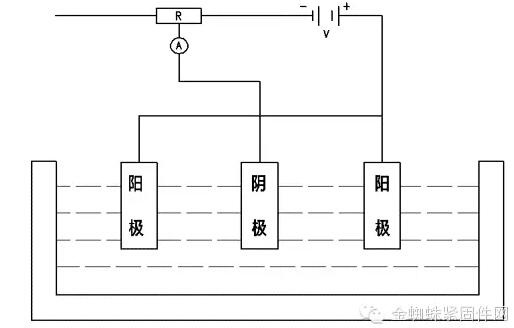
Surface treatment is a subject involving many courses such as electrochemistry, mechanics, physics, etc. In many enterprises, including operators, technical ministers and technicians (who can only draw mechanical drawings), they do not know much about it, resulting in the failure mode analyzed in FMEA of the quality system being out of line and the control of CP being empty. Principle and Basis of 1. Electroplating 1. Definition of electroplating: Electroplating is the main salt metal ions in the plating solution, under the action of DC electric field, due to diffusion, convection, electromigration and other mass transfer means to reach the working surface of the cathode, to obtain electrons and reduce to metal atoms, and further crystalline arrangement for the metal layer process. (Narrow) 2. Plating principle: Schematic diagram of electroplating device, the part to be plated is cathode, which is connected with the negative pole of DC power supply, metal anode is connected with the positive pole of DC power supply, and both anode and cathode are immersed in plating solution. When a certain potential is applied between the anode and the cathode, the following reaction occurs at the cathode: the metal ion Mn diffusing from the inside of the plating solution to the interface between the electrode and the plating solution obtains n electrons from the cathode and reduces to metal m; On the other hand, the anode has a completely opposite reaction to the cathode, I .e. the dissolution of metal m occurs at the anode interface, releasing n electrons to generate metal ion m n.
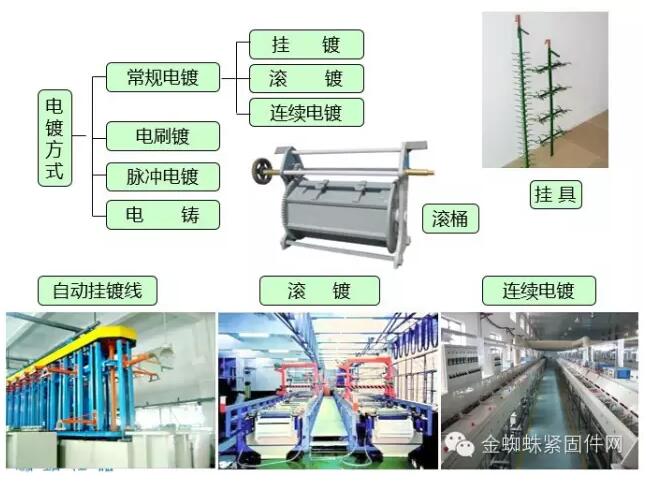
3. Brief introduction of electroplating solution composition 1) Main salt The main salt refers to the salt that can deposit the required coating metal on the cathode in the plating solution and is used to provide metal ions. The main salt concentration in the plating solution must be in an appropriate range. When other conditions remain unchanged, the increase or decrease of the main salt concentration will affect the electrodeposition process and the final coating organization. For example, the main salt concentration increases, the current efficiency increases, the metal deposition rate increases, the coating grains are coarser, and the solution dispersion ability decreases. (Zinc chloride) 2) Luo Mixture In some cases, if the metal ions of the main salt in the plating solution are simple ions, the grains of the plating layer are coarse, so the plating solution of complex ions should be used. The method of obtaining complex ions is to add a complexing agent, that is, a substance capable of complexing the metal ions of the main salt to form a complex. A complex is a "molecular compound" formed by the interaction of simple compounds ". In the complex-containing plating solution, the main factor affecting the plating effect is the relative content of the main salt and the complexing agent, that is, the free amount of the complexing agent, rather than the absolute content. (Plating under alkaline conditions, because most of the metal ions will precipitate as hydroxides, it is necessary to use complex plating, and the mixture is an essential component of the plating solution. Sodium hydroxide and triethanolamine in zincate zinc plating solution.) 3) Additional salt Additional salt is some alkali metal or alkaline earth metal salts in addition to the main salt in electroplating, which is mainly used to improve the conductivity of the electroplating solution and does not complex the metal ions in the main salt. Some additional salts can also improve the deep plating ability and dispersion ability of the plating solution, resulting in a fine coating. (Potassium chloride, sodium chloride quality is not very good) 4) Buffer A buffer is a substance used to stabilize the pH of a solution. This kind of substance is generally composed of weak acid and weak acid salt or weak base and weak base salt, which can reduce the pH value of the solution when it encounters alkali or acid. (boric acid) 5) Anode activator The substance in the plating solution that can promote the activation of the anode is called the anode activator. The role of the anode activator is to increase the current density at which the anode begins to passivate, thus ensuring that the anode is in an activated state and can be dissolved normally. When the content of anodic activator is insufficient, the anodic dissolution is abnormal, and the content of main salt decreases rapidly, which affects the stability of the plating solution. (for cyanide copper plating) 6) Additives Additives are substances that do not significantly change the conductivity of the coating and can significantly improve the performance of the coating. According to their role in the bath, additives can be divided into: brighteners, levelers, and fog inhibitors. 4. Factors affecting the quality of electroplating There are many factors that affect the quality of electroplating, including various components of the plating solution and various electroplating process parameters. Some of the main factors are described below. 1) Effect of pH The pH value in the plating solution can affect the discharge potential of hydrogen, the precipitation of alkaline inclusions, the composition of complexes or hydrates, and the degree of adsorption of additives. However, the degree of influence on various factors is generally unpredictable. The optimum pH value is often determined by experimentation. In plating solutions containing complexing agent ions, the pH may affect the balance of the various complexes present and must therefore be considered in terms of concentration. In the electroplating process, if the pH value increases, the cathode efficiency is higher than the anode efficiency, and if the pH value decreases, the opposite is true. The pH can be stabilized in a certain range by adding a buffer. 2) Effect of additives The brightener, leveler, wetting agent and other additives in the plating solution can significantly improve the plating tissue. This additive is inorganic and organic. The reason why inorganic additives work is that they form hydroxide or sulfide colloids with high dispersion in the electrolyte, which are adsorbed on the cathode surface to hinder the precipitation of metals and improve the cathodic polarization. The reason why organic additives work is that most of these additives are surface active substances, which will adsorb on the cathode surface to form a layer of film, which hinders the precipitation of metals, thus improving the cathodic polarization. In addition, some organic additives form colloids in the electrolyte and complex with metal ions to form colloid-metal ion complexes, which hinder the discharge of metal ions and improve cathodic polarization. 3) Effect of current density Any electroplating must have a current density range that produces a normal coating. When the current density is too low, the cathodic polarization effect is small, the coating orange crystal is coarse, or even no coating. As the current density increases, the cathodic polarization increases, and the grains of the coating become finer and finer. When the current density is too high and exceeds the limit current density, the quality of the coating begins to deteriorate, and even spongy, dendritic, burnt and blackened. The upper and lower limits of the change in current density are determined by the nature, concentration, temperature and agitation of the plating solution. Under normal circumstances, the main salt concentration increases, the coating temperature increases, and under the conditions of stirring, a larger current density can be allowed. 4) Influence of current waveform The influence of current waveform is through the change of cathode potential and current density to affect the cathode deposition process, which in turn affects the structure of the coating, even the composition, so that the coating performance and appearance changes. Practice has proved that the three-phase full-wave rectifier and regulated DC are equivalent, and have little effect on the coating structure, while other waveforms have a greater impact. 5) Effect of temperature The increase in the temperature of the plating solution can speed up the diffusion and reduce the concentration polarization. In addition, the temperature increase can also speed up the dehydration process of ions. The increased ionic and cathodic surface activity also reduces the electrochemical polarization, resulting in crystalline coarsening. On the other hand, an increase in temperature can increase the solubility of salts, thereby increasing conductivity and dispersion; it can also increase the upper limit of current density, thereby increasing production efficiency. 6) Effect of stirring Stirring reduces cathodic polarization and coarser grains, but increases current density and thus productivity. In addition, stirring can also enhance the effect of the leveling agent. The better the surface state of the product is, the better the surface coating effect is, and the shape of the product also affects the current distribution, position positioning, etc. Classification and Function of 2. Electroplating 1, according to the method of use can be roughly divided into five categories Electrochemical method: this method is characterized by the use of electrode reaction, the formation of plating layer on the surface of the parts, which is the most widely used: electroplating and anodic oxidation. Electroless plating method: This method is characterized by the use of material interactions to form a plating layer on the surface of the part when there is no current passing through. The main processes are: electroless plating (electroless nickel plating, electroless copper plating); Chemical conversion film treatment (zinc chromate passivation, steel phosphating, oxidation). Hot processing method: mainly hot galvanizing. High vacuum method. Other physical methods. 2, according to the role can be divided into five categories Improve the corrosion resistance of parts: for example, the surface of steel products is galvanized, zinc aluminum, etc. Improve the wear resistance of parts: such as chromium plating, nickel plating to improve wear resistance, anodizing to improve the wear resistance of aluminum products. Improve the protection and decoration performance of parts: such as chrome plating, nickel plating, copper plating, metal surface coloring, etc. Repair parts size: such as shaft, gear, spline and other important mechanical parts wear after use, can use iron plating, chrome plating repair size. Some parts are given special functions: for example, copper plating and silver plating can improve electrical conductivity; nickel-cobalt plating and nickel-iron plating can improve magnetic conductivity; tin plating can improve its acid resistance. 3, according to the processing method can be divided into four categories
4. Classification of zinc plating solution 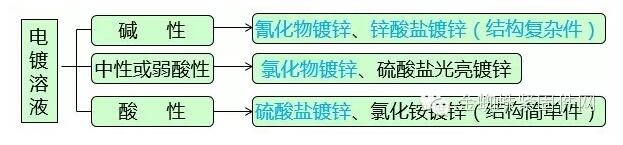 Cyanide zinc plating: the coating is crystallized carefully, will not turn black after hydrogen removal, has good dispersion ability of plating solution, wide temperature range and simple treatment of waste water; The current efficiency is low, it is not suitable for plating cast iron parts, it is toxic, easy to decompose, and makes the operation feel unsafe. Zincate galvanizing: it has no corrosive effect on iron and steel, can be converted by cyanide galvanizing solution, has a maintenance cost, has a fine coating crystal, is sensitive to as much quality as possible, and is convenient for wastewater treatment. The disadvantage is that the current efficiency is low, the gas irritation during electroplating is large, and exhaust equipment needs to be installed. Chloride zinc plating: high current efficiency (95%), good coating quality, less hydrogen permeation in the electroplating process, plating elastic parts, direct electroplating on castings or high carbon steel, little influence of plating solution on operators, no need for ventilation device, and convenient management and maintenance; The disadvantage is that it is highly corrosive to steel equipment, passivation film will "discolor" and ammonia chloride wastewater is difficult to treat. Ammonia-free plating can be improved. Sulfate galvanizing: The plating solution is simple, low cost, high current efficiency, fast deposition speed, suitable for high-speed electroplating on wires and strips. Compared with other types of plating solution, its cathodic polarization is small, the coating crystallization is coarse, the dispersion coverage ability is poor, only suitable for simple parts. Selection and Introduction of Surface Treatment Process for 3. Fasteners
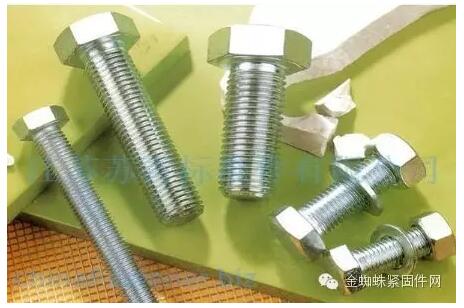
1. Fastener surface treatment process selection The choice of surface treatment is a problem faced by every designer. There are many types of surface treatment that can be selected, but there is only one principle: "economical and practical". Since almost all commercial fasteners are made of carbon steel and alloy steel, general fasteners are expected to prevent corrosion. In addition, the coating of surface treatment must be firmly attached and cannot fall off during installation and removal. For threaded fasteners, the coating must be thin enough to make the threads still fit after plating. Generally, the temperature limit of the coating is lower than that of the fastener material, so the working temperature requirement of the fastener should also be considered. For surface treatment, people are generally concerned about beauty and corrosion, but the main function of fasteners is to fasten parts, and surface treatment also has a great influence on the fastening performance of fasteners. Therefore, when choosing surface treatment, The factors of fastening performance should also be considered, that is, the consistency of installation torque-preload. A high-level designer should not only consider the design, but also pay attention to the assembly process, and even environmental protection requirements. The following is a brief introduction to some commonly used coatings for fasteners based on the above factors for reference by fastener practitioners. Electrogalvanizing Electrogalvanizing is the most commonly used coating for commercial fasteners. It is cheaper and looks better. It can be black and army green. However, its anti-corrosion performance is general, and its anti-corrosion performance is the lowest in the zinc plating (coating) layer. General galvanized neutral salt spray test within 72 hours, there are also the use of special sealing agent, making the neutral salt spray test for more than 200 hours, but the price is expensive, is the general galvanized 5 to 8 times. Electrogalvanizing process is easy to produce hydrogen embrittlement, so the bolts above grade 10.9 are generally not treated with galvanizing. Although the oven can be dehydrogenated after plating, the passivation film will be destroyed when it is above 60 ℃, so dehydrogenation must be carried out before passivation after plating. So the operability is poor, the processing cost is high. In reality, the general production plant will not take the initiative to dehydrogen, unless the specific customer's mandatory requirements. Electro-galvanized fasteners torque-pre-tightening force consistency is poor, and unstable, generally not used in important parts of the connection. In order to improve the torque-pre-tightening force consistency, the method of coating lubricating substance after plating can also be used to improve and improve the torque-pre-tightening force consistency.
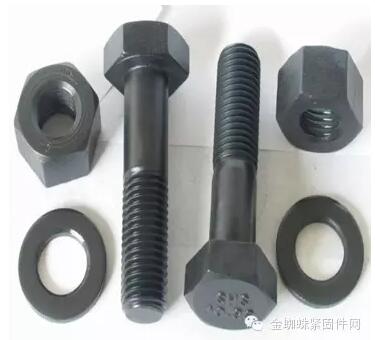
One basic principle is that phosphating is cheaper than galvanizing and its corrosion resistance is worse than galvanizing. After phosphating, it should be coated with oil, and its corrosion resistance has a great relationship with the performance of the oil. For example, after phosphating, the general anti-rust oil is coated, and the neutral salt spray test is only 10 to 20 hours. Coated with high-grade anti-rust oil, it can reach 72 to 96 hours. But its price is the general phosphating oil 2 to 3 times. Fastener phosphating commonly used two kinds, zinc phosphating and manganese phosphating. The lubrication performance of zinc phosphating is better than that of manganese phosphating, and the corrosion resistance and wear resistance of manganese phosphating are better than that of zinc plating. Its use temperature can reach 225 degrees Fahrenheit to 400 degrees (107~204 ℃). Especially the connection of some important parts. For example, engine connecting rod bolts, nuts, cylinder heads, main bearings, flywheel bolts, wheel bolts and nuts. High-strength bolts are phosphated to avoid hydrogen embrittlement problems, so bolts above grade 10.9 in the industrial field are generally treated with phosphating surface. Oxidation (blackening) Blackening oil is a popular coating for industrial fasteners because it is the cheapest and looks good before the oil runs out. Since blackening has almost no anti-rust ability, it will rust soon after no oil. Even in the oil state, the salt spray test can only reach 3 to 5 hours.
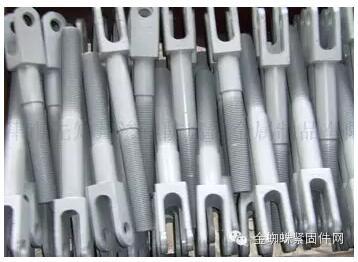
The corrosion resistance of cadmium coating is very good, especially in the marine atmosphere, the corrosion resistance is better than other surface treatments. Electroplating cadmium in the process of waste liquid treatment costs, high cost, its price is about 15 to 20 times the zinc. Therefore, it is not used in general industries and is only used in some specific environments. For example, it is used for fasteners for oil drilling platforms and naval aircraft. chrome electroplating Chromium coating is very stable in the atmosphere, not easy to change color and lose luster, high hardness and good wear resistance. On the fasteners with chrome plating is generally used as a decorative role. It is rarely used in industrial fields with high corrosion resistance, because good chrome plated fasteners are as expensive as stainless steel, but when stainless steel is not strong enough, chrome plated fasteners are used instead. In order to prevent corrosion, copper and nickel should be plated before chromium plating. The chrome plating can withstand temperatures up to 1200 degrees Fahrenheit (650°C). However, it also has the same hydrogen embrittlement problem as electro-galvanizing. Nickel plating It is mainly used for both anti-corrosion and good conductivity. Such as the lead-out terminal of the vehicle battery. hot-dip zinc Hot dip zinc is a thermal diffusion coating of zinc heated to liquid. The thickness of the coating is 15~100 μm, and it is not easy to control, but it has good corrosion resistance and is mostly used in engineering. The pollution is serious in the process of hot dip zinc processing, such as zinc waste and zinc vapor. Due to the thick coating, a problem of difficulty in screwing the inner and outer threads is caused in the fastener. Due to the temperature of hot dip zinc processing,(340-500C) it cannot be used for fasteners above grade 10.9. zinc infiltration Zinc infiltration is a zinc powder solid metallurgical thermal diffusion coating. The uniformity is good, and the uniform layer can be obtained in the thread and blind hole. The thickness of the coating is 10~110 μm, and the error can be controlled at 10%. Its bonding strength and anti-corrosion performance with the substrate are the best in zinc coatings (electro-galvanized, hot-dip zinc, dacrome). Its processing is non-polluting and the most environmentally friendly. Dacrome There is no hydrogen embrittlement problem, and the torque-preload consistent performance is very good. If the environmental protection of hexavalent chromium is not considered, it is actually the most suitable for high-strength fasteners with high corrosion protection requirements.
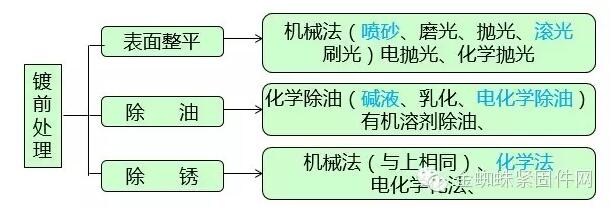
Brief Introduction of Common Surface Treatment Process of Fasteners-Electrogalvanizing 1. Pre-plating treatment classification
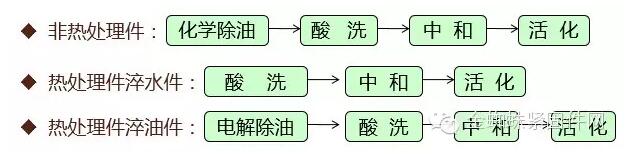
Electrochemical degreasing: also called electrolytic degreasing, the parts are placed on the cathode or anode, and the surface tension of the oil and solution interface is greatly reduced under the action of direct current, and the generated oxygen has a strong tearing effect on the surface of the attachment. Electrochemical degreasing is divided into cathode method and anode method according to workpiece property, as well as cathode-anode combination method. The cathode method has higher degreasing effect efficiency than anode method, and the substrate is not corroded, but it is easy to infiltrate hydrogen. It is suitable for degreasing non-ferrous metals and alloy parts such as aluminum, zinc, tin, lead, copper and other non-ferrous metals. The anode degreasing efficiency is lower than the cathode, and has great corrosion. Chemical derusting: chemical derusting uses acidic solution, so it is also called pickling, also known as erosion, strong erosion and weak erosion (activation) 2. Pre-plating process
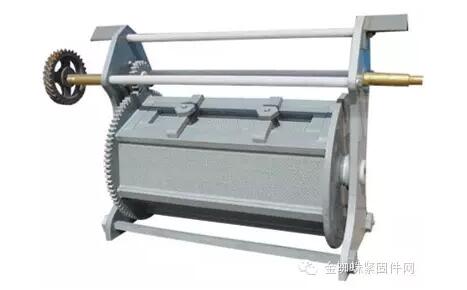
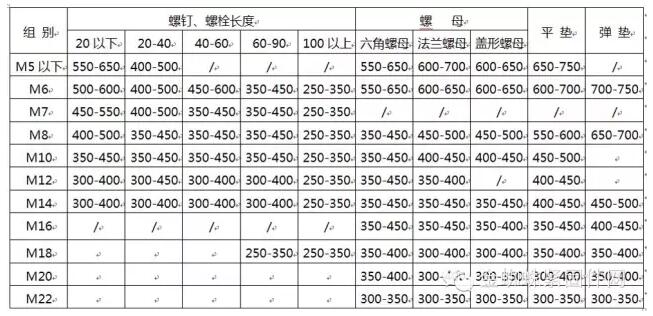
3. Brief introduction of galvanizing process Process characteristics of potassium chloride zinc plating: Potassium chloride zinc plating on the parts of the material suitable for plating hinge, high current efficiency, is suitable for the barrel plating production of fasteners. In addition, potassium chloride zinc plating can allow a wide current density, and the plating solution is stable, does not contain complexes, and waste water treatment is simple. Therefore, most manufacturers use potassium chloride zinc plating process. 4. Key points of operation 1) Loading capacity of parts and control of current: The size and length of the products are different, and the difference is large. In order to facilitate the operation and meet the technological requirements, the loading capacity of the products is specially specified: the products of various specifications are conical buckets with an upper circle of 30cm, a lower circle of 25cm and a height of 25cm, and the loading capacity of 4 buckets is one electroplating tank (I .e. 3 rollers). According to this quantity, the total surface area of various parts is calculated, and then multiplied by the current density required by the process to determine the current range of galvanizing parts. The current control of products of various specifications is shown in the attached table for reference. Reference Attachment: Standard Parts Galvanizing Current Comparison Table
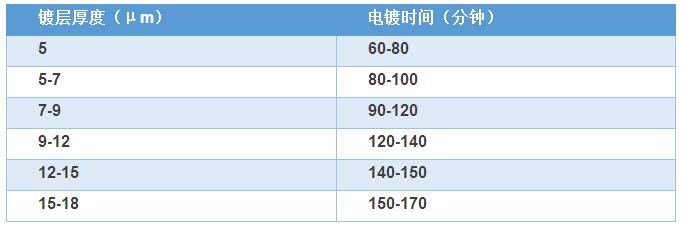
2) Control of plating thickness and plating time When the load and current of the product are controlled at a certain value, the thickness of the coating depends only on the length of the plating time. The longer the time, the thicker the coating thickness. The requirements for coating thickness and time are as follows:
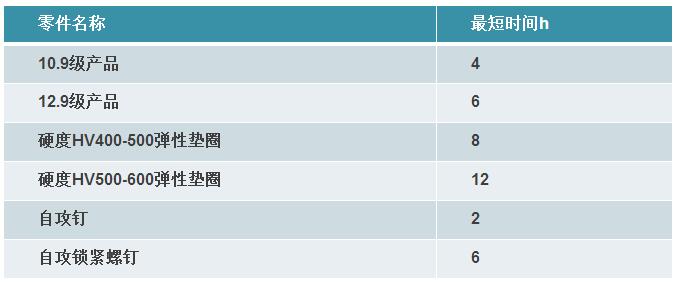
3) Addition of brightener In order to obtain a bright coating, brighteners and softeners are added in each shift. The addition was diluted with 5-10 times water. If too little brightener is added, a bright and ideal coating will not be obtained. If too much is added, the coating will be brittle and loose, and even organic impurities will precipitate due to excessive brightness, which will be attached to the coating, resulting in blistering and peeling of the coating. The amount of brightener added is proportional to the power-on time and current, and is added in an appropriate amount within the range of consumption of 60-120ml/KAh. Each shift is counted for 4 hours: 200ml of softener and 1000ml of brightener. 5. Maintenance of plating solution a) Potassium chloride plating solution is relatively stable. The composition of the bath solution shall be tested once a week during single-shift production and analyzed once every three days during two-shift production. Necessary supplements shall be made according to the analysis results. The process inspection records of plating solution shall be made. B) measure the PH value of the plating solution once per shift, adjust the PH value to 5-6 with dilute hydrochloric acid, check the consumption of zinc plate, and supplement it in time. c) The metal at the bottom of the tank shall be sucked out before leaving work every day to prevent the metal from dissolving in the solution to affect its performance and the quality of the coating. d) Large-scale treatment shall be carried out regularly, generally once every 1-2 months, and the plating solution process inspection records shall be made. 6. Brief introduction of post-plating (zinc) process Parts in the pickling, cathode electrolytic degreasing and electroplating process are likely to be in the coating and matrix metal lattice hydrogen seepage, resulting in lattice distortion, internal stress increases, resulting in brittleness called hydrogen embrittlement. hydrogen removal treatment In order to eliminate hydrogen embrittlement, post-plating heat treatment is generally used to allow hydrogen to escape. The higher the temperature, the longer the time, the more complete the removal of hydrogen, but more than 250 ℃ zinc crystal structure will be deformed, brittle, corrosion resistance decreased significantly. Practice temperature: 200±10 ℃. See the following table for hydrogen removal process of different standard parts:
* Note: After plating within four hours, the furnace temperature is uniform. passivation treatment A. zinc chemical nature of lively, in the air is easy to oxidize dark, the formation of "white rust" corrosion. After galvanizing, chromate treatment can generate a layer of chemical conversion film on the zinc layer, so that the active metal zinc is in a passive state. The chromic acid film with a thickness of less than 0.5UM can improve the corrosion resistance of the galvanized layer by 6-8. And give beautiful decorative appearance and anti-pollution ability. B. passivation solution depth is divided into three types: low Senior high school, in order to meet the requirements of different customers, blunt flower color is divided into blue and white, multicolored, black, military green, golden yellow, trivalent blue and white and trivalent multicolored. Three elements of chromic acid purified salt Although there are many passivation formulations, any formulation of practical value must include a main salt, an activator and a certain hydrogen ion concentration. Precautions (1) The quality of the coating requires meticulous and good gloss. Since the low concentration passivation solution has no chemical polishing ability, the quality of the zinc coating must be kept consistent. (2) the best passivation temperature is 15~35. The temperature is low, the film is slow, the color is light and the film is thin; the temperature is high, the film thickness is loose, and the adhesion is not strong. Automatic line production is best controlled at about 25 ° C to ensure that the same color is obtained within a certain period of time. passivation time Depending on the main salt concentration, pH, activator concentration and temperature. In particular, the automatic line should keep the above factors within the specification. When other conditions are the same, the passivation time is shortened in summer and prolonged in winter. (1) during passivation, the parts and passivation solution should move relative to each other, which is conducive to the convection and diffusion of the solution, prevents the parts from sticking, and makes the film layer uniform. Automatic on-line passivation must be vigorously stirred with compressed air. (2) cleaning must be thorough, the temperature of hot water should not exceed 50 ℃, otherwise easy to fall off the film. (3) color passivation must be baked aging, in order to improve the adhesion and corrosion resistance of the film. However, the aging temperature shall not exceed 65 ℃. When the temperature is high, the film is dehydrated and cracked, and the corrosion resistance is obviously reduced. When using infrared drying, in addition to pay attention to the temperature, the aging time shall not exceed 15min, otherwise the corrosion resistance will also decrease. Brief Introduction of Common Surface Treatment Process for Fasteners-Phosphating/Oxidation
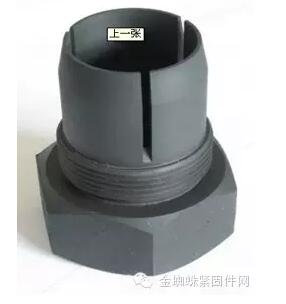
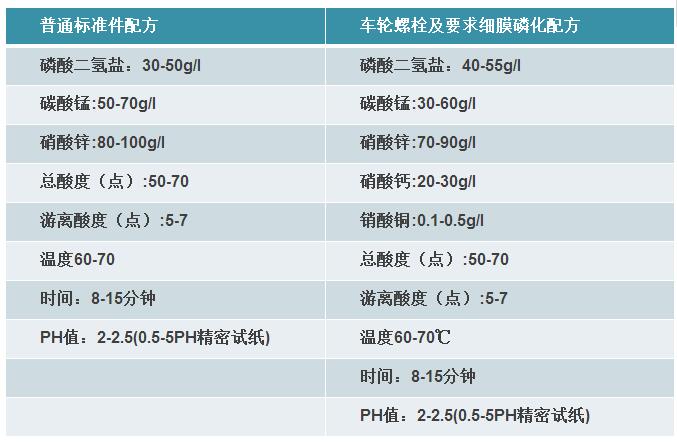
phosphating Definition: The metal is chemically treated in a phosphate solution containing manganese, iron, and zinc to form a protective film of phosphate that is insoluble in water on the metal surface. Phosphating, chemical conversion film treatment (chromate passivation of zinc, phosphating of steel, oxidation) Phosphating is cheaper than galvanizing, and its corrosion resistance is worse than galvanizing. Fastener phosphating commonly used two kinds, zinc phosphating and manganese phosphating. The lubrication performance of zinc phosphating is better than that of manganese phosphating, and the corrosion resistance and wear resistance of manganese phosphating are better than that of zinc plating. Its use temperature can reach 225 degrees Fahrenheit to 400 degrees (107~204 ℃). High-strength bolts are phosphated to avoid hydrogen embrittlement problems, so bolts above grade 10.9 in the industrial field are generally treated with phosphating surface. Especially the connection of some important parts. For example, engine connecting rod bolts, nuts, cylinder heads, main bearings, flywheel bolts, wheel bolts and nuts. 1. Classification and application of phosphating According to the phosphating film forming system: zinc series, zinc calcium series, zinc manganese series, manganese series, iron series, amorphous phase iron series. Classified by phosphating film thickness (film weight))(GB/T6807-2001): sub-lightweight (0.1-1.0g/m2); Lightweight (1.1-1.4), sub-heavyweight (4.6-7.5) and heavyweight (>7.5 are generally used as the reference basis for coating the bottom layer, and the thicker the coating, the less applicable it is. Processing temperature: normal temperature is room temperature; Low temperature: 25-45 ℃; Medium temperature: 60-76 ℃; High temperature: more than 80 ℃. Classification of phosphating treatment methods: brush coating method, full immersion method, full spray method, spray-immersion combination method. There is also a classification by promoter type........ Functional classification of phosphating film: coating backing, anti-corrosion phosphating, cold working lubrication, wear-resistant phosphating. 2. Formulation and process of common phosphating solution for standard parts (reference) Simplified phosphating process: degreasing-pickling-(blackening)-phosphating-sealing-aging-oil invasion after drying
(Source: Golden Spider Fastener Web) |
Related News

Mobile:+860772-7507388
Mailbox:yxxs@hqfastner.com
Address: No.8, Xingtai Road, Chuanshan Town, Liujiang District, Liuzhou City, Guangxi Province


-Add WeChat-

-WeChat Public Number-

-TikTok-
Copyright©2024 Liuzhou Overseas Chinese Fastener Co., Ltd. All Rights Reserved. | SEO Tags | Business License | city substation
