
Southeast Asia encounters nightmare of broken supply! The manufacturing industry is in a "five shortage" dilemma!
Release time:
2021-09-16
The Delta mutant strain has ravaged Southeast Asia, with local outbreaks on the rise since July, with many countries nearing a tipping point, putting the region's manufacturing sector in a bind, disrupting global supplies of commodities such as rubber gloves, semiconductors and sport utility vehicles and threatening regional economic recovery. At present, Southeast Asian manufacturers are generally facing the "five shortages" dilemma of "lack of materials, cabinets, cores, labor and vaccines. Chaos in Asian markets threatens to distort global supply chains, with the United Nations estimating that about 42 per cent of the world's exports come from Asia.
|
Southeast Asia encounters nightmare of broken supply! The manufacturing industry is in a "five shortage" dilemma! |
|
The Delta mutant strain has ravaged Southeast Asia, with local outbreaks on the rise since July, with many countries nearing a tipping point, putting the region's manufacturing sector in a bind, disrupting global supplies of commodities such as rubber gloves, semiconductors and sport utility vehicles and threatening regional economic recovery. At present, Southeast Asian manufacturers are generally facing the "five shortages" dilemma of "lack of materials, cabinets, cores, labor and vaccines. Chaos in Asian markets threatens to distort global supply chains, with the United Nations estimating that about 42 per cent of the world's exports come from Asia. 01 Malaysia The latest outbreak in Malaysia began in July and has since seen an exponential increase in new confirmed cases and new deaths. Although they began to close the city on June 1, it did not play an effective role. At present, the closure of the city is being extended indefinitely. The Malaysian government's plan to gradually restart production activities when the number of cases drops below 4000 per day still seems far away.
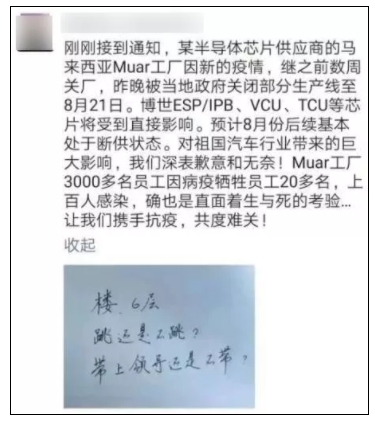
Empty Malaysian streets after "total lockdown" On August 16, Malaysian Prime Minister Muhiddin announced that he had submitted his resignation, becoming the shortest prime minister in Malaysian history. Southeast Asia accounts for 27% of the global semiconductor packaging and testing market, while Malaysia accounts for nearly 13% of the market. Malaysia is known as the "semiconductor packaging and testing center" and is the seventh largest exporter of semiconductor products in the world. According to data from the United Nations, since 2002, Malaysia's integrated circuit export share has been in the forefront of the world. In 2018, Malaysia's integrated circuit export share has surpassed Japan and is equal to that of the United States. According to TrendForce research, the global passive component (MLCC) market will face challenges due to the impact of the Malaysian government's extension of national action regulations. Among them, high-end MLCC is the most tight, the main shortage of products corresponding to the end products include mobile phones, pen, Netcom, servers and 5G base stations. Wang Shoutai, chairman of the Malaysian Semiconductor Industry Association, said: "some factories have been infected, resulting in the closure of factories." On August 17, automotive electronics company Bosch China senior circle of friends issued a message that, because of the serious epidemic in Malaysia, a semiconductor chip supplier in Malaysia's Muar (Muar) factory was asked by the local government to close some production lines until August 21. He mentioned that the Muar factory "has sacrificed more than 20 employees and hundreds of people infected because of the new crown epidemic, facing the test of life and death."
Malaysia's furniture industry is even worse. After Malaysia implemented the blockade, furniture factories banned operations. This resulted in the detention of more than 2000 containers of export goods in the furniture industry, which was worth more than 0.2 billion ringgit. 02 Vietnam This round of outbreak in Vietnam has also reached the most critical state. It has been confirmed that the blockade of the capital Hanoi will be extended until August 22, while Ho Chi Minh City will continue to maintain social isolation until September 15.
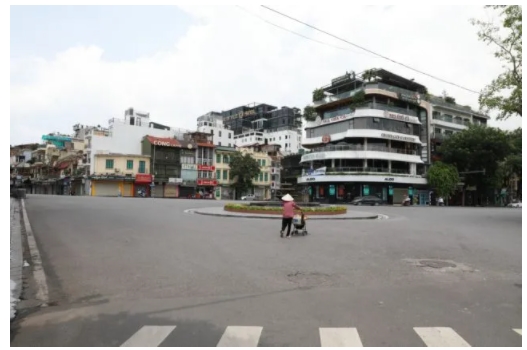
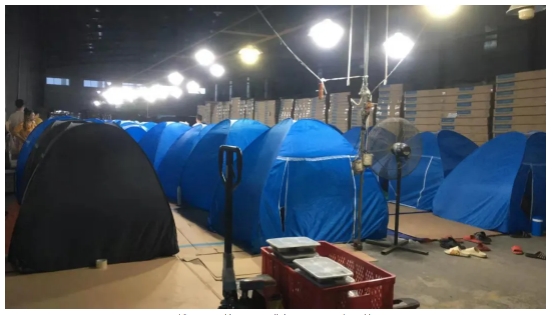
Status of Hanoi In early August, the Vietnamese government maintained a blockade of 19 cities and provinces in the south, severely restricting travel, which had a significant impact on production and supply throughout the country. So although many Vietnamese exporters have already received orders until the third quarter of 2021 or the whole year of 2021. However, the failure of epidemic prevention has forced many enterprises to stop operating. Vietnam's requirements for enterprises in blocked areas to maintain operation are "three local" and "2.1 line". The so-called "three on-site" refers to "on-site production, on-site eating, on-site rest". To put it simply, workers don't leave when they enter the factory. They eat and live in the factory. Some factories really set up tents for workers in the factory area. The so-called "2.1 line" refers to the enterprise transporting workers to and from the factory to and from the dormitory to avoid external contact and ensure production.
Vietnamese factory prepares rest-in-place tents for workers About 90 percent of factories in Ho Chi Minh City that make textiles, footwear, bags, electronics and wood products have suspended operations for failing to meet requirements to provide on-site accommodation for workers. Take Nike as an example. In late July this year, S & P Global warned that Nike's Vietnam-made sports shoes may face the risk of being out of stock. Nike's two suppliers in Vietnam, Chang Shin Vietnam Co. and Pou Chen Corp, were discontinued because of the outbreak. Large enterprises and factories can still support for a period of time, but small enterprises in Vietnam are not so lucky, and more and more small enterprises have closed down. In addition, the same blockade caused by the shutdown of factories, the closure of warehouses, no one to deal with imported goods, resulting in serious congestion in southern Vietnam's ports, Ho Chi Minh City's largest port Kailai Port (Cat Lai) has a backlog of more than 100000 TEUs, the station density has reached 85%. Saigon New Port, which manages the inner city river terminal in Ho Chi Minh City, has informed customers that the outbreak has seriously affected port operations, congestion has worsened, and the backlog is likely to increase due to the slow pick-up or release of imported containers. The liquidity and transit capacity of Gilai and neighboring deep-sea ports will also be weakened by congestion at major ports. Vietnam's two major ports, Kailai Port Terminal and New Port Gai Mei International Port Terminal (TCIT), have notified the suspension of receiving some containers from August 5, 2021. Port yards are also under pressure to transfer containers. Drivers crossing between Vietnam's provinces must hold nucleic acid test results for 3-7 days, otherwise they cannot operate. 03 Indonesia Indonesia, the world's fourth most populous country, has long replaced India as the epicenter of Asia's neo-crowning epidemic. On August 4, Indonesia surpassed 100000 in the number of new crown deaths, becoming the second Asian country after India to have more cumulative deaths than 100000. Tens of millions of small companies that are the backbone of Indonesia's economy are at risk of collapse as Indonesia has repeatedly extended epidemic prevention restrictions and most stimulus economic aid has not been released. According to the Indonesian Association of Small, Medium and Micro Enterprises, the outbreak has led to the closure of more than 30 million small and medium-sized enterprises, most of which are from agriculture, fisheries and trade. And some associations in Indonesia are already calling for anti-dumping against our products. For example, Silmy Karim, president of the Indonesian Steel Manufacturers Association, said on August 13 that China's imports of steel flooded the Indonesian market, and steel became Indonesia's second largest import commodity, and most of them were imported from China. The Indonesian Steel Manufacturers Association has requested the Indonesian central government to impose anti-dumping measures on Chinese imports of steel, including hot-rolled steel, steel plates, cold-rolled steel, wire rods, bars, profiles and coated steel, but the Indonesian government has not yet agreed. In addition, the new cross-border e-commerce policy implemented in Indonesia since August 1 has also had a significant impact on Chinese exporters. Since August 1, the Indonesian government has required all inbound e-commerce packages to contain the recipient's personal or corporate identity information (NPWP or NIK/KTP/passport number). This new policy targets all B2B, B2C and C2C express packages, with the exception of express documents. SHEIN, the largest cross-border fast fashion giant surpassing ZARA, has stopped its operations in Indonesia on July 29. 04 Philippines The Philippines is the second country in Southeast Asia to experience a severe outbreak after Indonesia. At present, the Delta mutant strain has spread almost all over the Philippines. In order to curb its spread, Manila, the capital of the Philippines, re-entered the city on August 6. The Manila metropolitan area with a population of more than 13 million is dotted with checkpoints to ensure that only people engaged in necessary work can take to the streets. According to the epidemic prevention guidelines, only enterprises and workers in the necessary livelihood industries can operate and work normally in the blockaded areas. Only one family member in each family can go out to buy food and necessities, and others must stay at home. Many residents of Metro Manila will face unemployment during the lockdown, and many complain that they do not have enough financial resources to live on for the next two weeks. 05 Thailand In early August, Thailand expanded the highest-level epidemic control area from 13 provinces, including Bangkok, to 29 provinces, and on August 16, the Thai government's new coronary pneumonia epidemic management center notified the extension of the country's 29 highest-level epidemic control areas, including the capital Bangkok, "city closures" and curfews and other prevention and control measures until August 31. In terms of work arrangements, it is required to continue to work at home, enterprises with more than 50 employees must prepare internal isolation places, and enterprises with more than 100 employees should implement closed management. The Thai baht has been the worst-performing currency in emerging Asia this year, casting a shadow over the purchases of Thai importers. The baht has lost 11 per cent of its value so far this year. Thailand's central bank has reminded private companies to manage foreign exchange risks, especially those engaged in import and export trade. Much of the devaluation of the Thai baht stems from the recession caused by the new crown epidemic, which has hit the Thai economy, which is highly dependent on tourism, and fewer tourists have meant less demand for the baht. According to the latest news, the Thai Ministry of Commerce will sign a mini-version of the free trade agreement with my country's Hainan Province on the 20th of this month. The two sides will strengthen cooperation between small and medium-sized enterprises in trade and investment. 06 "Dangerous" and "Machine" for Chinese Enterprises" The latest data report released by the financial information company Essence Huamai (IHS Markit) shows that the ASEAN National Manufacturing Purchasing Managers Index (PMI) fell to 44.6 in July from 49 in June, and it was below the dry line for the second consecutive month. It is a 13-month low. Among the seven ASEAN countries involved in the report, five countries have a manufacturing index below 50, namely Myanmar, Indonesia, Malaysia, Vietnam, and Thailand. Manufacturing demand in ASEAN countries fell further in July, with both factory output and new orders falling for the second consecutive month, the highest level since May 2020, the report said. U.S. media recently reported that "the outbreak has led to factory closures in South and Southeast Asia, increasing the risk of global supply chain disruptions, and U.S. consumers may soon find local shelves empty". China is naturally the best choice for buyers to transfer orders. At present, many Southeast Asian orders have returned to China. But on the other hand, a large number of orders gathered in China, constantly pushing up China's export freight, profit thin, low value of the product has no shipping space. At the same time, the French foreign trade bank (Natixis) estimates that Indonesia, Malaysia, the Philippines, Vietnam and Thailand account for 5.7 percent of global exports, but they will have a significant impact on larger economies such as the United States and China, especially in the field of electronic products. China imports 38 percent of its data processing equipment and 29 percent of its telecommunications equipment from these five countries, while half of the United States' semiconductor imports come from these five countries. Not long ago, Xiaopeng Auto founder He Xiaopeng commented in forwarding the Malaysian epidemic, "It's more bitter to pull the core to cut off the supply, and it's more sad to raise a glass to sell." Millet founder Lei Jun with a "alas" word comment. (Source: Focus Horizon) |

Related News

Mobile:+860772-7507388
Mailbox:yxxs@hqfastner.com
Address: No.8, Xingtai Road, Chuanshan Town, Liujiang District, Liuzhou City, Guangxi Province


-Add WeChat-

-WeChat Public Number-

-TikTok-
Copyright©2024 Liuzhou Overseas Chinese Fastener Co., Ltd. All Rights Reserved. | SEO Tags | Business License | city substation
