
Unprecedented! Electricity and production restriction upgrade! A large number of factories in Jiangsu, Zhejiang and Yunnan have been suspended.
Release time:
2021-09-28
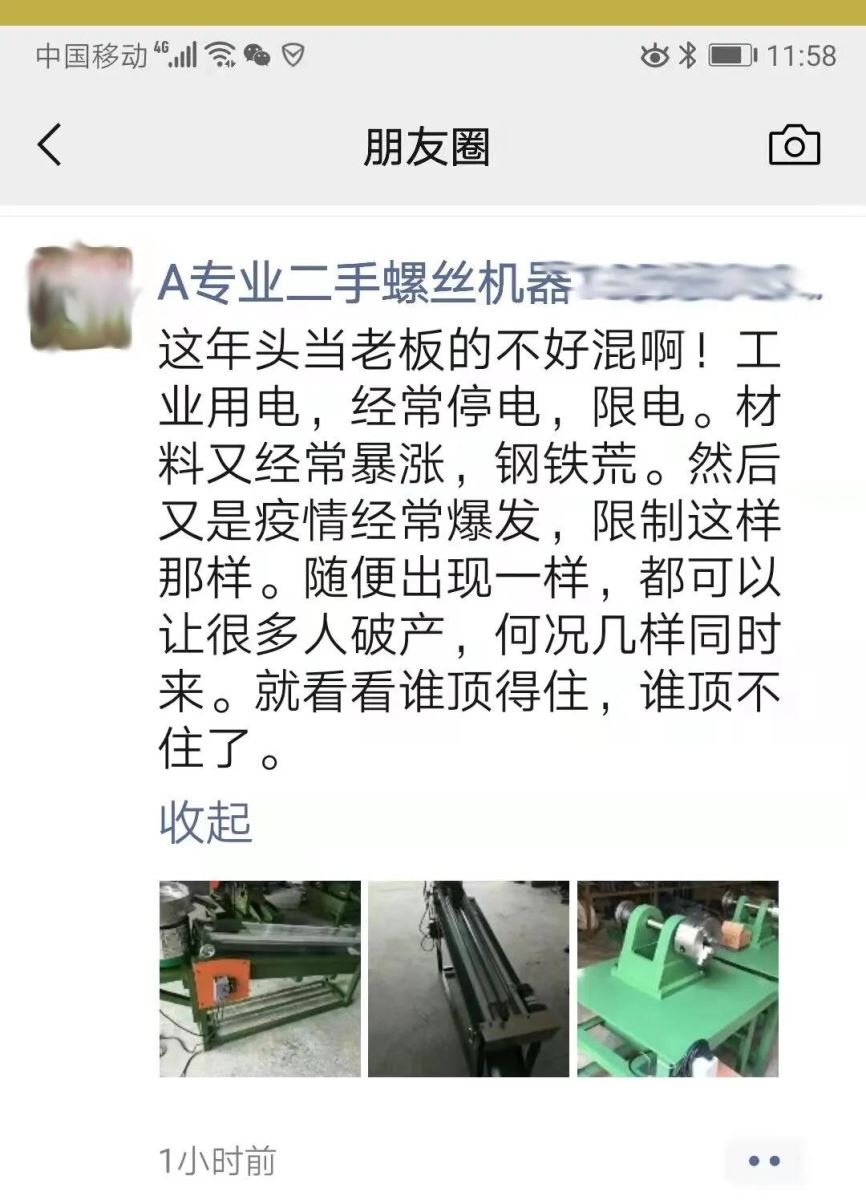
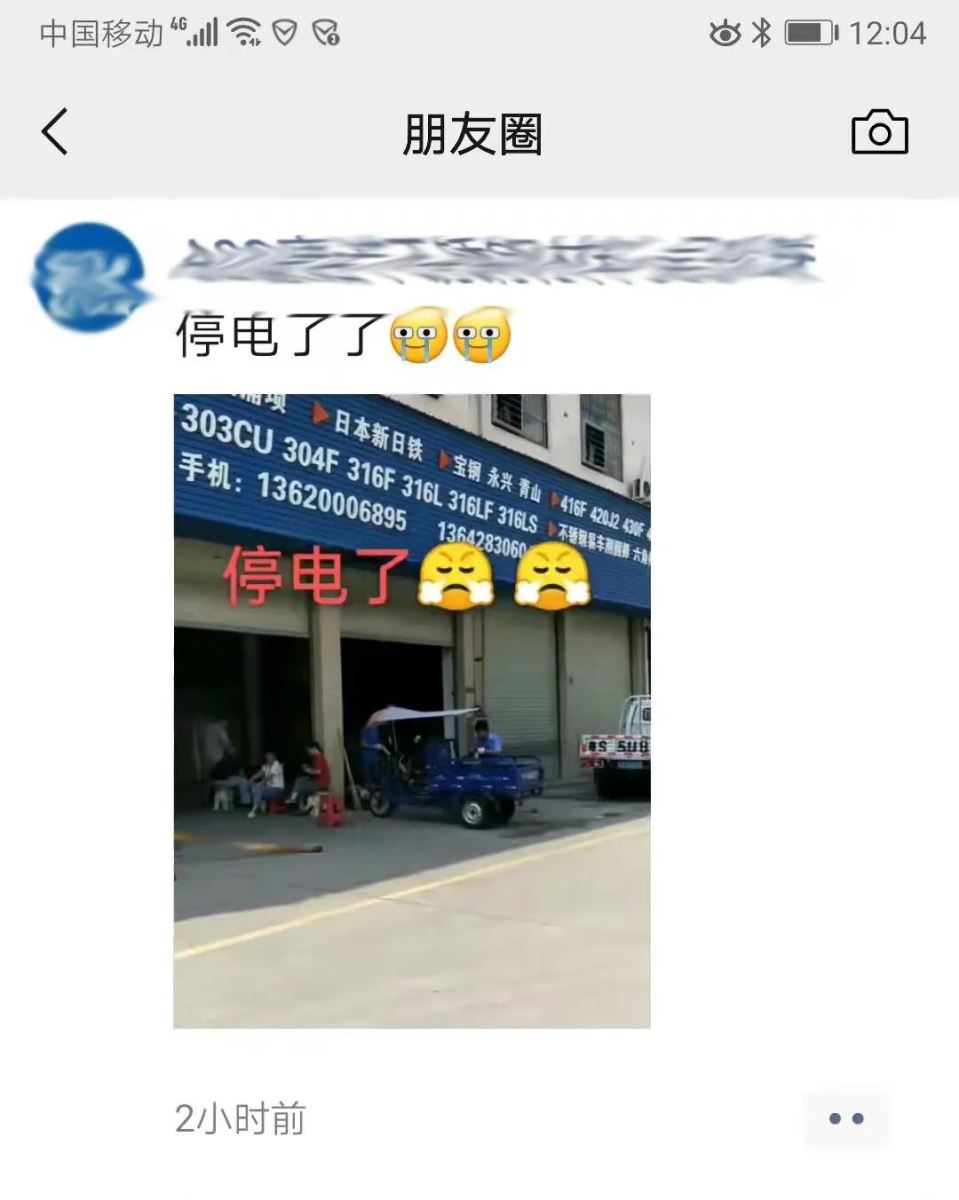
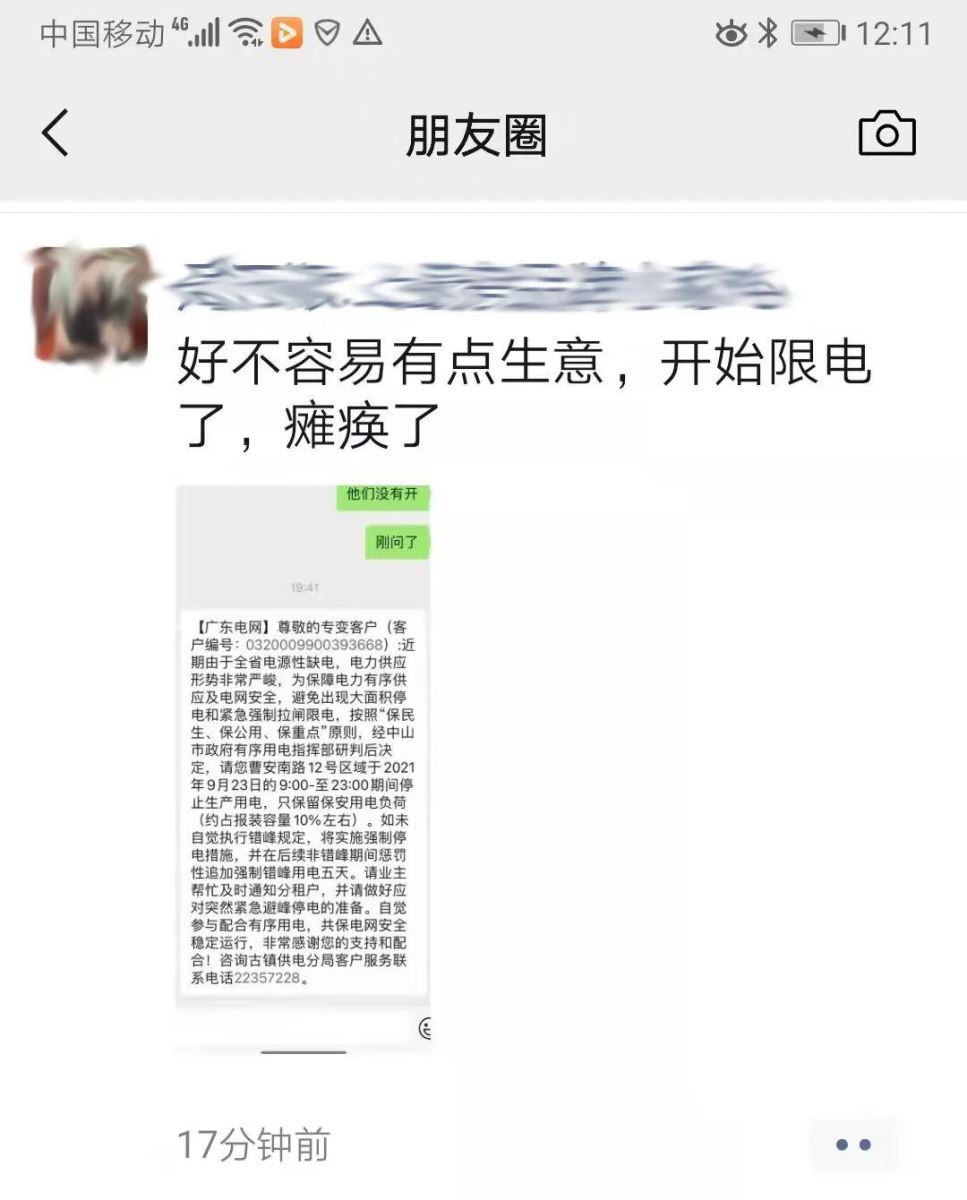
Recently, many places have issued policy documents on dual control of energy consumption. Various industries with high energy consumption and high pollution have stopped production and work, and production in Jiangsu, Yunnan, Zhejiang and other places has been restricted and upgraded. Since September 16, a number of fastener enterprises have also received emergency notice from the government, and the news of power restriction and production restriction has exploded the circle of friends.
|
Unprecedented! Electricity and production restriction upgrade! A large number of factories in Jiangsu, Zhejiang and Yunnan have been suspended. |
|
Recently, many places have issued policy documents on dual control of energy consumption. Various industries with high energy consumption and high pollution have stopped production and work, and production in Jiangsu, Yunnan, Zhejiang and other places has been restricted and upgraded. Since September 16, a number of fastener enterprises have also received emergency notice from the government, and the news of power restriction and production restriction has exploded the circle of friends.
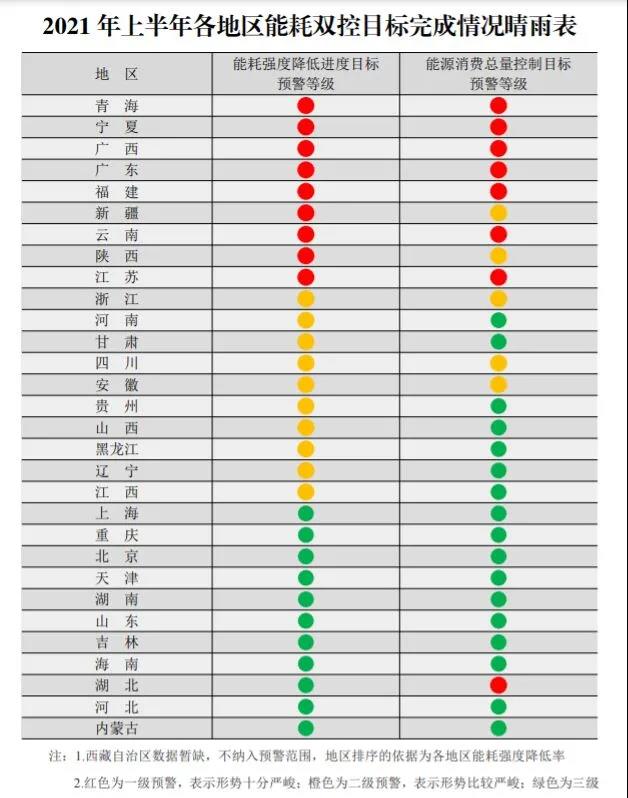
Some fastener companies start work at night and stop work during the day in order to deliver orders. 01 Which areas have a big impact? The so-called "dual control of energy consumption" policy refers to the relevant policies of dual control of energy consumption intensity and total amount. A number of industry insiders told reporters that since the beginning of this year, the assessment of "dual control of energy consumption" has been relatively strict, and the assessment results will be used as the basis for the work evaluation of the local leadership team. In the first quarter and half of this year, the National Development and Reform Commission also issued the early warning level of energy consumption intensity reduction progress target and the early warning level of total energy consumption control target. The governments of various regions listed as red will be more severe in their control of high energy-consuming enterprises in the region. The ''Barometer of the Completion of Energy Consumption Dual Control Targets in Various Regions in the First Half of 2021 ''issued by the National Development and Reform Commission shows that in terms of energy consumption intensity reduction, Qinghai, Ningxia, Guangxi, Guangdong, Fujian, Xinjiang, Yunnan, Shaanxi, and Jiangsu The energy consumption intensity of each province (region) rose instead of falling in the first half of the year, and was listed as a red first-level warning; in terms of total energy consumption control, eight provinces (regions) including Qinghai, Ningxia, Guangxi, Guangdong, Fujian, Yunnan, Jiangsu, and Hubei were listed as red first-level warnings.
Guangdong: On September 16, Guangdong Power Grid said that starting from September 16, the power consumption plan of "two starts, two stops and five stops" will be implemented. Every Sunday, Monday, Tuesday, Wednesday and Thursday, the peak shift will be realized. On the peak shift day, only the security load will be retained, and the security load will be below 15% of the total load! Shandong: the province due to insufficient coal supply, power shortage, start power rationing measures. Jiangsu: from September 8 to 30, a special energy-saving supervision action was carried out for enterprises with annual comprehensive energy consumption of more than 50000 tons. The scope of supervision includes 323 enterprises with annual comprehensive energy consumption of more than 50000 tons of standard coal, 29 "two high" projects with comprehensive energy consumption of more than 50000 tons of standard coal, and "two high" projects with comprehensive energy consumption of more than 5000 tons of standard coal put into operation since 2020. Following Nantong's earliest power rationing in early September, enterprises in Xuzhou, Taizhou, Suzhou and other places have successively received notices of production restrictions. Zhejiang: Measures will be taken by the power sector for key energy-consuming enterprises that have not been shut down before 11: 00 on September 21. Shaoxing Keqiao District alone involves 161 enterprises, all in the printing and dyeing and chemical fiber industries. Anhui: September 22 news, the province's energy supply work leading group office "on the orderly use of electricity emergency notice." In order to ensure the smooth operation of the province's power grid and reliable power supply, after research, it was decided to start the province's orderly power consumption plan on September 22. Qinghai: Issued power curtailment warning, the scope of power curtailment continues to expand. Ningxia: High-energy-consuming enterprises stop production for one month. Guangxi: Guangxi has introduced new dual-control measures, requiring that starting from September, production restrictions be imposed on high-energy-consuming enterprises such as electrolytic aluminum, alumina, steel, and cement, and clear production reduction standards are given. Sichuan: Suspension of non-essential production, lighting, office load. Henan: part of the processing enterprises to limit electricity for more than three weeks. Chongqing: Some factories cut off power production in early August. Yunnan: Two rounds of power rationing have been carried out, and the follow-up will continue to increase. The average monthly output of industrial silicon enterprises in September-December shall not be higher than 10% of August output (I. e., 90% reduction in output); the average monthly output of yellow phosphorus production lines in September-December shall not exceed 10% of August 2021 output (I. e., 90% reduction in output). Inner Mongolia: Strictly control the power rationing time of enterprises, and the price of electricity will not rise by more than 10%. From 2021 onwards, Inner Mongolia will no longer approve coke (blue carbon), calcium carbide, polyvinyl chloride (PVC), synthetic ammonia (urea), methanol, ethylene glycol, caustic soda, soda ash, ammonium phosphate, yellow phosphorus... No downstream conversion of polysilicon, monocrystalline silicon and other new capacity projects. Shaanxi: It is required that the newly built "two high" projects shall not be put into production from September to December. The newly built "two high" projects that have been put into production this year will be limited to 60% on the basis of last month's output. Other "two high" enterprises will implement measures such as reducing the operation load of production lines and stopping the operation of submerged arc furnace to limit production to ensure a 50% reduction in production in September. What is the impact of 02? Why put "energy consumption double control" in such a prominent position? Tu Jianjun, a researcher at Columbia University's Global Energy Policy Center, told China Business News that although theoretically speaking, China's energy consumption still has some room for growth before the carbon peak in 2030, the higher the peak, the more difficult it will be to achieve carbon neutrality in 2060. Therefore, carbon reduction actions urgently need to start now. On September 22, the national development and Reform Commission issued a policy interpretation on the recently issued plan for improving the dual control system of energy consumption intensity and total amount (hereinafter referred to as the plan), proposing that the implementation of dual control of energy consumption intensity and total amount is an important institutional arrangement for the Party Central Committee and the State Council to strengthen the construction of ecological civilization and promote high-quality development, It is an important starting point to achieve the goal of carbon peak and carbon neutrality. Guo Jiaofeng, a researcher at the Institute of resources and environmental policy of the development research center of the State Council, analyzed the first finance and economics that two key points in the plan are worthy of attention: first, to encourage renewable energy consumption, and the plan proposes to over fulfill the responsibility weight of incentive renewable energy power consumption, The consumption amount exceeding the minimum renewable energy power consumption responsibility weight will not be included in the assessment of the total energy consumption in the region. The second is to emphasize that the intensity of energy consumption should be greatly reduced. The state continues to take the reduction of energy consumption intensity as a binding indicator of the five-year plan for national economic and social development, reasonably sets the total energy consumption index, and decomposes the five-year goal of dual control of energy consumption to the provinces. "For this plan, various places have not had time to issue specific rules, so fossil energy and clean energy consumption are confused. By the end of this year, it will definitely be calculated according to the new plan. That is, to broaden the energy space of renewable energy, and at the same time speed up technological transformation, recycling and industrial structure adjustment, production capacity will also be released. Therefore, we believe that the impact of the dual-control policy on the volatility of economic performance is relatively short-term." Guo Jiao Feng said. Guo Jiaofeng said that in the first half of the year, many countries because of the tightening of epidemic prevention and control policies, steel and other products can not be self-sufficient, so China's external demand is strong. As the global epidemic eases, demand for energy-intensive industries and products will also decline, so production pressures will not be significant. Liu Bin, deputy director of the Institute of Energy, Environment and Economics of Tsinghua University, told First Finance and Economics that the recent coal supply is indeed tight, and the upgrading of dual control in some areas has superimposed the shortage of power supply. According to public data, the proportion of coal in China's energy structure is declining year by year, while the proportion of non-fossil energy is increasing year by year. From 2012 to 2020, the share of coal fell from 68.5 per cent to 56.8 per cent, an average annual decline of more than 1 percentage point, while the share of non-fossil fuels rose from 0.7 per cent to 15.6 per cent, an average annual growth of 0.7 percentage points. The "Research on the 14th Five-Year Development Plan of the Electric Power Industry" issued by the China Electricity Council pointed out that under the goal of "carbon emissions and carbon peaks", the power development momentum has changed from traditional coal power to clean energy. In terms of power structure, it is estimated that by 2025, the country's non-fossil energy power generation capacity will be 1.57 billion kilowatts, accounting for about 53.2 percent, an increase of 7.9 percent over 2020, and non-fossil energy power generation will account for about 39.5 percent. Liu Bin said that individual local governments have recently been interviewed for "dual control", and coal mining restrictions will naturally affect coal supply, thereby further affecting power supply. The smooth "double control" in the first half of the year is also regarded as one of the reasons why coal stocks are in short supply. It is worth noting that on September 21, the website of the National Development and Reform Commission issued three articles in succession, from policy implementation to power plant inventory system and other aspects to ensure the supply and price of coal. The National Development and Reform Commission said that recently, with the Energy Bureau jointly sent a supervision team to relevant key provinces and enterprises, ports to carry out energy supply and price stability work supervision. At the same time, reduce the standard of coal storage in power plants in peak season. In principle, the number of days available for coal storage in power plants in peak season of coal consumption should be kept at 7-12 days, and the upper limit of coal storage in peak period of coal consumption should not be higher than 12 days. Zeng Xiang, a senior analyst at Yide Futures Power Coal, said that lowering the standard of coal storage in power plants in peak season will help reduce the pressure of coal-fired power plants to replenish their warehouses and allocate coal resources in a balanced manner among power enterprises, which is expected to further ease the shortage of power coal supply. 03 Commodity raw material prices skyrocket With the restriction of electricity and production, the prices of some commodity raw materials have also skyrocketed. On September 22, once a sharp correction of coal futures "three brothers" to reopen the rising mode. By the end of the day, coking coal was up nearly 9 per cent, coke was up more than 6 per cent and the main contract for thermal coal was up nearly 9 per cent. In the-share market, power stocks broke out, with the power stock index and thermal power index up more than 6%. Guangdong Power A, Longyuan Technology, Huaneng International and other stocks closed up or rose more than 10%. Some people in the industry said that the administrative instructions of "one size fits all" shutdown and production restriction in some areas are too rough, and more market-oriented mechanisms should be used to solve the problem of energy consumption. The dual control of energy consumption should be staggered according to the market rules and the proportion of enterprise energy consumption in the local proportion, and the rhythm should be arranged to avoid "swarms". 04 Avoid "one size fits all" "No clear documents have been issued, only oral notification is required to limit production." Yue Ming, head of a fabric textile enterprise in Wujiang, Suzhou, told First Finance and Economics that their factory began to limit production on September 18. The local textile enterprises have been divided according to the per mu tax of the enterprises in the past two years, requiring Class A enterprises to limit electricity by 50%, Class B enterprises to limit electricity by 60%, and Class C and Class D enterprises to directly stop production. Yue Ming's factory belongs to Class B, so he shut down 60% of the machines after receiving the notice and gave 2/3 workers a long vacation. This year's orders show the phenomenon of cold textile and hot clothing. Therefore, Yueming's factory does not have too many orders to rush to work at present, mainly digesting the remaining 40% of its production capacity. Even so, Yue Ming said that the impact of power rationing on enterprises is not small. For example, he said, those workers who are on holiday will make some compensation even if they don't work, otherwise it will be even more difficult to recruit workers next year. In addition, in order to ensure a certain scale of tax per mu, even if the factory is partially shut down, the tax should not be "too outrageous" to ensure that it will not become a Class C enterprise next year. Hu Kehua, deputy director of the Social responsibility Office of the China Textile Industry Federation and director of the Sustainable Development Project, told China Business News that many small and micro enterprises in the textile industry have recently stopped production directly. He pointed out that "grasping the big and releasing the small is the key", and the dual control of energy consumption should be staggered according to the market rules and the proportion of enterprise energy consumption in the local ladder, so as to avoid "swarming". Liu Bin said that many local governments and enterprises still have misunderstandings about the promotion of carbon neutrality work. The understanding of carbon neutrality must see that it is a long-term policy. It must be forward-looking in the policy formulation process, from long-term considerations, from the overall layout, taking into account the lock-in effect of technology, and at the same time having an international perspective and a spirit of cooperation. Tu Jianjun believes that the "one size fits all" administrative instructions to shut down and restrict production in some areas are too rough, and more market-oriented mechanisms should be used to solve the problem of energy consumption. For example, the introduction of production quotas, carbon emission quotas, green electricity trading and other methods, so that enterprises for their own energy consumption mass production growth period, stable expectations, through a reasonable trading mechanism to encourage enterprises to reduce energy consumption, to promote the long-term sustainable development of the industry, rather than "headache, foot pain". (Source: First Finance and Economics, Gold Spider Fastener Net Comprehensive Arrangement) |
Related News

Mobile:+860772-7507388
Mailbox:yxxs@hqfastner.com
Address: No.8, Xingtai Road, Chuanshan Town, Liujiang District, Liuzhou City, Guangxi Province


-Add WeChat-

-WeChat Public Number-

-TikTok-
Copyright©2024 Liuzhou Overseas Chinese Fastener Co., Ltd. All Rights Reserved. | SEO Tags | Business License | city substation
